Backseat Rally Wiki
Drive through forests, snowy passes and cherry-blossom roads while your co-driver calls the route. Master rain, mud, snow, cars, stages, medals and head-to-head races.
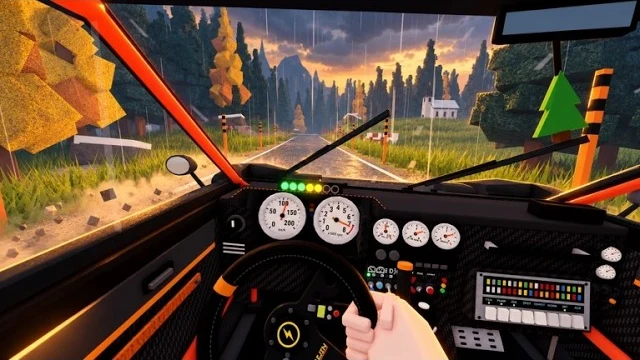
Explore the Backseat Rally Wiki
Eight quick-jump sections covering codes, driving basics, co-driver teamwork, cars, stages, medals, multiplayer and updates.
Latest Updates
Discover the newest guides, tips, and content
Backseat Rally All Medals: Milestones & Unlock Walkthrough
Learn how to earn all Backseat Rally medals across forest, snow, rain, and mud stages with stage strategies, co-driver tips, and progression goals.
Backseat Rally Co-Driver Guide: Callouts, Roles & Timing
Master the co-driver role in Backseat Rally with callout systems, stage-specific pacing tips, weather communication, and teamwork drills.
Backseat Rally Weather Conditions: Rain, Mud & Snow Guide
Master Backseat Rally weather conditions: how rain, mud, and snow change grip, visibility, braking, and co-driver calls on every stage.
Backseat Rally 2 Player: Co-Driver Setup & Teamwork Guide
Learn how to play Backseat Rally with 2 players: driver and co-driver roles, callouts, weather tactics, and teamwork tips for faster stage times.
Backseat Rally All Maps: Stage-by-Stage Route Walkthrough
Learn every Backseat Rally map: forest, snowy mountain, cherry-blossom, rain, and mud stages with route challenges, callout tips, and practice strategies.
Backseat Rally All Stages: 2026 Walkthrough & Route Tips
Master every Backseat Rally stage: forest, snowy mountain, cherry-blossom road, rain, and mud routes with co-driver callouts, grip notes, and finish strategies.
Backseat Rally Beginner Guide: Roles, Stages & First Wins
Learn how to start Backseat Rally: driver and co-driver roles, callout basics, beginner cars, stage overviews, weather tips, and your first finish.
Backseat Rally Best Cars: Tier List & Scenario Picks
Compare the 7 Backseat Rally cars by handling, stability, and weather performance. Find the best car for beginners, races, snow, mud, and rain stages.
Backseat Rally Best Map: Top Stages Ranked & Route Tips
Find the best Backseat Rally map for your team. Compare forest, snowy mountain, cherry blossom, rain, and mud stages with route tips and co-driver callouts.
Backseat Rally Better Cars: Best Vehicle Picks & Tier Rankings
Compare all 7 Backseat Rally cars by stability, handling, and weather performance. Find the best car for snow, rain, mud, and head-to-head races.
Backseat Rally Car Progression: Unlock Order & Upgrade Path
Learn how Backseat Rally car progression works: the 7-car roster, unlock priorities, tier rankings, and which car to use in rain, snow, and races.
Backseat Rally Car Tuning: Stage-by-Stage Setup Guide
Learn how to tune your Backseat Rally car setup for forest, snow, rain, and mud stages. Compare the 7 cars and match your build to every route.
Backseat Rally Codes
Check the current code status, expected rewards, and the correct in-game redemption route before entering a code.
Backseat Rally codes are entered through the game's own redemption interface. Use only codes shared through the game's official Roblox page or official developer announcements, and avoid third-party lists that may contain copied, expired, or altered codes.
No confirmed reward is currently displayed in the official game information.
Check the official game page and in-game code interface for newly released promotional codes.
Expired codes do not grant rewards.
If a code produces an invalid or expired message, do not repeatedly submit it or rely on unofficial replacement codes.
In-game redemption menu
Depends on the promotional code.
Launch Backseat Rally, open the game's code or settings interface, enter the code exactly as published, and confirm the redemption.
Backseat Rally Beginner Guide
Learn the basic rally loop, understand the driver and co-driver roles, and complete your first challenge with fewer mistakes.
Backseat Rally is built around coordinated rally driving. One player focuses on controlling the vehicle while the other helps interpret the route, prepares for turns, and communicates hazards before they become problems.
Join a rally and choose roles
Enter a rally session and decide who will drive and who will act as the co-driver. The driver needs a clear view of the road, while the co-driver should concentrate on route information and upcoming hazards.
Agree on short callouts before the stage begins, such as left, right, brake, hazard, and continue.
Start slowly and read the route
Begin the stage at a controlled speed instead of accelerating immediately. Watch the road shape, identify the next turn, and keep the vehicle positioned so the driver has time to react.
Smooth steering and early braking are safer than correcting a late turn at high speed.
Complete the first challenge
Work through the route by combining the driver's vehicle control with the co-driver's warnings. Slow down for sharp turns, avoid obstacles, and prioritize reaching the finish over taking unnecessary risks.
After each mistake, reset communication first; unclear calls usually cause more problems than a lack of speed.
Backseat Rally Controls and Co-Driver Guide
Use clear role separation to improve route reading, turn timing, obstacle handling, and communication during a rally.
The driver and co-driver solve different parts of the same problem. The driver manages the vehicle's movement and immediate reactions, while the co-driver helps transform route information into short, useful instructions.
Accelerate, brake, steer, maintain a safe line, and recover from slides or missed turns.
Keep attention on the road and acknowledge important calls without trying to repeat every detail.
Watch the route, identify upcoming turns, monitor hazards, and give warnings before the driver reaches them.
Use concise calls with direction, severity, and timing, such as sharp left, slow right, or obstacle ahead.
Agree on callout vocabulary, confirm major instructions, and avoid speaking over urgent warnings.
Keep routine conversation short during technical sections and reserve voice priority for turns, hazards, and recovery instructions.
Follow the available route prompts while the driver remains responsible for steering, speed, braking, and obstacle avoidance.
Treat prompts as advance information rather than automatic control; adjust speed early when a turn or hazard is announced.
Backseat Rally Cars Tier List
Compare the seven available vehicle roles by control difficulty, stability, speed potential, and tolerance for mistakes.
A useful rally ranking is not based on top speed alone. Stable vehicles are often stronger for new players and difficult weather, while faster vehicles reward precise steering, earlier braking, and better driver and co-driver coordination.
Balanced rally car
1 available
Best for: New players, learning routes, and mixed conditions
Offers the safest combination of control, recovery time, and usable pace.
All-weather rally car
1 available
Best for: Rain, reduced visibility, and complex road sections
Prioritizes traction and consistency when the route becomes difficult to read.
Technical-course car
1 available
Best for: Tight turns and obstacle-heavy stages
Rewards accurate steering and controlled braking without being overly difficult.
Endurance rally car
1 available
Best for: Long stages and consistent finish attempts
Its dependable behavior makes it easier to maintain a steady pace over time.
Speed-focused rally car
1 available
Best for: Experienced drivers and open sections
Can produce strong stage times but requires earlier braking and cleaner calls.
Lightweight agile car
1 available
Best for: Players comfortable with quick corrections
Useful in rapid direction changes, but small steering mistakes can become large corrections.
High-risk performance car
1 available
Best for: Challenge runs and skilled teams
Its performance potential is offset by low mistake tolerance, especially in poor weather or unfamiliar stages.
Backseat Rally Stages and Maps Guide
Explore the game's forest, snowy mountain, and cherry-blossom environments while preparing for rain, mud, and snow conditions.
Backseat Rally rewards teams that combine accurate driving with clear co-driver communication. The five-stage route set introduces different visual environments and surface conditions, so teams should learn where visibility, traction, and timing can change before attempting faster runs.
Forest Stage
Forest roads- Limited sightlines around trees and bends
- Rapid direction changes that require early callouts
- Reduced reaction time when entering tight corners
Call upcoming turns before the driver reaches visual range, especially through linked bends.
Run at a controlled pace first and focus on consistent braking points rather than maximum speed.
Snowy Mountain Stage
Snow-covered mountain roads- Lower grip on snow-covered surfaces
- Mountain turns that punish late braking
- Greater risk from carrying too much speed into corners
Give earlier warnings for hairpins, steep sections, and any change in road direction.
Use smooth steering and gradual braking while learning how much speed the surface allows.
Cherry Blossom Road Stage
Cherry-blossom-lined roads- Decorative scenery that can make route details harder to read
- Bends that require dependable visual landmarks
- Frequent opportunities for missed or delayed direction calls
Use landmarks and turn order instead of relying only on general left or right calls.
Repeat the route until the team can recognize major sections and prepare for turns before they appear.
Rain Stage
Wet-weather roads- Reduced visibility during rainfall
- Less predictable stopping distance
- Greater punishment for abrupt steering or braking
Prioritize early warnings and confirm difficult calls briefly before the driver commits.
Leave additional room for braking and avoid chasing maximum speed until the team can complete the route without major errors.
Mud and Snow Conditions Stage
Mud- and snow-affected surfaces- Variable traction across the route
- Slower or less stable vehicle response
- Surface changes that can make familiar driving inputs unreliable
Call surface changes as soon as they are visible and coordinate speed adjustments before entering them.
Practice smooth throttle control, moderate corner entry speed, and recovery from small slides.
Backseat Rally Medals and Rewards
Use medals and race results as milestones for improving consistency, communication, and speed. Start by completing stages reliably, then refine performance through timed challenges and competitive runs.
A useful progression path in Backseat Rally begins with finishing each stage, continues through cleaner and faster attempts, and eventually focuses on strong competitive performances. The exact target for each result depends on the stage and conditions, so teams should treat medals as performance milestones rather than a substitute for route practice.
Complete a Stage
Finish the route successfullyPrioritize safe driving, clear calls, and learning the stage layout.
Establishes a baseline result and reveals sections that need practice.
Improve the Stage Time
Reduce avoidable delaysReview braking points, shorten unnecessary pauses, and improve the timing of co-driver calls.
Builds consistency before attempting more aggressive driving.
Earn a Higher Medal Result
Combine clean execution with speedMaintain a stable pace through difficult sections while limiting collisions, missed turns, and communication errors.
Shows that the team can repeat a strong run rather than relying on a single successful attempt.
Challenge a Timed Run
Optimize the complete routeCompare repeated attempts, identify the largest time losses, and practice those sections separately.
Turns general familiarity into a deliberate route and performance plan.
Compete Against Other Players
Perform under competitive pressureUse a dependable driver and co-driver pairing, communicate concisely, and avoid risky decisions that can erase a strong run.
Tests consistency, teamwork, and adaptation across different players and conditions.
Backseat Rally Multiplayer Guide
Good multiplayer runs depend on clear roles, short instructions, and a shared approach to difficult sections. Use these steps to reduce missed calls and keep the team coordinated.
Backseat Rally is designed around cooperation between the person controlling the vehicle and the teammate helping with route information. Teams can improve quickly by deciding responsibilities before the race, using consistent callouts, and switching roles when a different player is better suited to driving or navigation.
- Invite friends into the same play session.
- Decide who will start as the driver and who will act as the co-driver.
- Agree on whether the first run is for learning the route or setting a fast time.
Make the role assignment explicit before the race begins so both players know who is responsible for each decision.
- Use short direction and hazard calls.
- Give warnings early enough for the driver to react.
- Confirm especially important calls without creating unnecessary conversation.
Consistency matters more than complicated terminology; use the same words for the same situations throughout the stage.
- Use a controlled pace while learning unfamiliar sections.
- Slow down before low-grip areas such as mud, rain, or snow.
- Let the co-driver focus on upcoming turns and surface changes.
The driver should avoid making sudden changes that the co-driver cannot anticipate.
Use Voice Communication Carefully
- Keep background noise low during difficult sections.
- Avoid speaking over an important route call.
- Use brief confirmations when a call has been understood.
If voice chat is unavailable, use the game's available text or signal options and agree on a simple set of messages first.
- Change positions after a practice run if one player is more comfortable navigating.
- Use a role swap to help each teammate understand the other position.
- Keep the same callout system after switching.
Temporary role changes are most useful between runs, when the team can reset without interrupting an active stage.
- Join available multiplayer sessions and state which role you prefer.
- Use simple, universal callouts with players you have not met before.
- Treat the first attempt as a coordination run before pursuing a record.
When playing with a new teammate, clarity and simple calls are more valuable than aggressive speed.
Backseat Rally Updates and New Content
Use this section as a return point for tracking changes to Backseat Rally. Separate content that is already available from developer previews so players know what they can try immediately.
Backseat Rally can evolve through new routes, vehicle adjustments, environmental conditions, and changes to multiplayer or racing systems. A useful update hub should distinguish playable content from announced or previewed ideas and give returning players a clear reason to revisit the game.
Live Stage Content
Available content- Track the five-stage route set currently presented by the game.
- Note the forest, snowy mountain, and cherry-blossom environments.
- Record how rain, mud, and snow affect route practice and team strategy.
Replay familiar stages after updates to identify route, surface, or timing changes.
Vehicle Adjustments
Gameplay change category- Monitor changes that affect acceleration, steering, braking, or stability.
- Recheck established braking points after handling adjustments.
- Compare vehicle behavior on dry, wet, muddy, and snowy surfaces.
Run a short practice test before returning to medal or competitive attempts.
New Stages and Routes
New-content category- Look for additional routes beyond the existing five-stage set.
- Check whether new locations introduce different visibility or traction challenges.
- Update team callouts when route landmarks or turn sequences change.
Complete a learning run first, then create a dedicated practice plan for the new route.
Weather and Surface Changes
Environment category- Watch for new weather patterns or changes to existing rain, mud, and snow conditions.
- Expect visibility and grip to influence both driving and co-driver timing.
- Reassess safe speeds when surface behavior changes.
Practice weather-specific sections separately before attempting a full-speed run.
Multiplayer and Race Systems
Gameplay feature category- Track changes to team roles, competitive events, or race flow.
- Check whether communication or role-switching routines need adjustment.
- Review medal and timing goals after major race-system changes.
Play one coordination-focused session after each relevant change before chasing personal bests.
Developer Previews
Preview content- Keep announced ideas separate from features already playable in the game.
- Watch for previews involving vehicles, stages, weather, or new mechanics.
- Revisit the live game after an announced feature becomes available.
Treat previews as planning information and confirm availability in the game before building a practice schedule around them.